About Poety Matters


Censorship can take many forms. The inability to find a place of publication can be social censorship.

Poetry is freedom. Anyone can write poetry.


Nevertheless, it takes a lot of work to create the poetry that reaches the places only poetry knows.


08 December 2025

Poems as open, democratic spaces.


                                                   Photo by Norbert Braun on Unsplash 

'The problem most readers have is that they want to understand through paraphrase. They want to compel the poem to make a prose statement. At school I was taught that poems have 'hidden meanings', which one could get at only by means of analysis, but once located the poem could be 'understood' and its magic in some way controlled. The opposite is true. Poems are wonderfully open, democratic spaces. They may ask us to read them several times before we understand the balances and contrasts, the lights and shadows, that they offer, but they are for the most part not deliberately obscure. Few make sense in the way prose makes sense. Those that seem to — Robert Frost's, for example, or William Carlos William's, or John Betjeman's — probably mean rather more than they seem to and they require more focused attention from us. No good poem makes common sense: the essence of a good poem is the uncommonness of the sense it makes. It is a structuring of words in which many meanings, or meanings at many levels, are enacted. If we read poems as prose, they have very little to say.'

From the Introduction to The Great Modern Poets: An Anthology of the Best Poets and Poetry since 1900, Edited by Michael Schmidt, Published by Quercus.

https://poetrybusiness.co.uk/book-author/michael-schmidt/ 


21 May 2024

Plea for humanity


The Book of Sir Thomas More, Act 2, Scene 4

Grant them removed, and grant that this your noise
Hath chid down all the majesty of England;
Imagine that you see the wretched strangers,
Their babies at their backs and their poor luggage,
Plodding to the ports and coasts for transportation,
And that you sit as kings in your desires,
Authority quite silent by your brawl,
And you in ruff of your opinions clothed;
What had you got? I’ll tell you: you had taught
How insolence and strong hand should prevail,
How order should be quelled; and by this pattern
Not one of you should live an aged man,
For other ruffians, as their fancies wrought,
With self same hand, self reasons, and self right,
Would shark on you, and men like ravenous fishes
Would feed on one another….
Say now the king
Should so much come too short of your great trespass
As but to banish you, whither would you go?
What country, by the nature of your error,
Should give you harbour? go you to France or Flanders,
To any German province, to Spain or Portugal,
Nay, any where that not adheres to England,
Why, you must needs be strangers: would you be pleased
To find a nation of such barbarous temper,
That, breaking out in hideous violence,
Would not afford you an abode on earth,
Whet their detested knives against your throats,
Spurn you like dogs, and like as if that God
Owed not nor made not you, nor that the claimants
Were not all appropriate to your comforts,
But chartered unto them, what would you think
To be thus used? this is the strangers case;
And this your mountainish inhumanity.

https://qz.com/786163/the-banned-400-year-old-shakespearean-speech-being-used-for-refugee-rights-today

06 May 2024

Frank O'Hara — Having a Coke with You


    Steve Wall,  a splash of garden, Flickr creative commons.

 https://www.nytimes.com/2024/04/30/podcasts/a-poem-about-you-for-you.html?unlocked_article_code=1.oU0.kUJO.WsbDmpcHThHv&smid=url-share

A Poem About You, for You

A. O, Scott, critic at New York Times Book Review, shares one of his favourite love poems. 

25 November 2021

Final issue of Poetry Matters

The final issue of Poetry Matters, Issue 40, was published in December 2020.


In April 2021 the first issue of the new poetry magazine, oxygen, was published.


Green Tree Publishing 

17 April 2020

Another shot at a counter cultural revolution

Let us not ruin this new opportunity for far-reaching cultural change. Let's get serious.

In a time of pause, many voices still don't shut up. They still want to dominate, they still want to gripe and point the finger at others. They are there at the barricades waiting to burst through the current restrictions placed upon their bodies.

But for many it is a time for much needed introspection and shifting from the addiction to entertainment, attention-seeking and instant gratification.

We have been asked, every one of us, to change our habits, to stop what we have been doing, in order to protect the collective good.

We are working together, we are co-operating, we are acknowledging our interdependence. It is beautiful to witness. People are noticing others because they have to physically stay distant from them. People have slowed down because they have to be aware of their actions. In the space created, kindness and consideration and thoughtfulness appear.

Isolation can do a lot of good for people. We can begin to reach into our inner resourcefulness, our inner creativity.

We are all creative and we are all able to adapt. That is how we have come to have such a huge impact on our habitat. 

So now that we are all experiencing this together we can enhance our creativity for the good of all. 

Artists are people who choose to devote a large part of their lives to creative expression. A true artist does not do this because they want to be rich or famous or special. A true artist not only produces works of art, but a different way to be human. They practice not just art production but new ways of seeing, being, feeling, and relating to the world and others.   

04 December 2019

The work of poetry

Poetry is looking about with a torch backstage.

Poetry doesn't enter by the front door declaring itself. It uses the back door, climbs in through windows, or drops down the chimney.

Poetry unbridles words from their hackneyed uses. It lets them out to find fresh fields. 


01 December 2019

A poem is a poem

Having an idea to write a poem about something produces a dull work that is not truly poetry, but rather prosaic - even if it has used within it poetic devices.

Real poetry comes from something that wakes up inside us. 

20 June 2019

being a poet

is to learn an undesignated language

is to travel aridity in search of abandoned truths

is to walk the wrong way in the lane posted failure

is to release the idea of perfection 

is to understand the situation and live with it

is to become inscrutable 

is to honour the poem in everything

and let go


28 May 2019

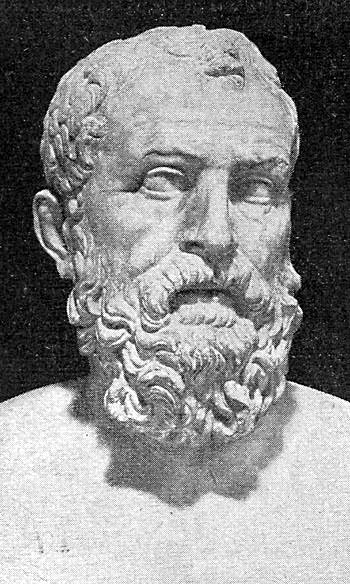
Solon, the poet statesman


Born in 630 BCE to an aristocratic family possessing modest wealth, it was through his poetry that Solon first rose to prominence in Athens.

Because he lived before records of written history and biography had been established, there are many versions regarding a poem that he composed and publicly read that roused the population to eventually triumph over Megara in a dispute over the island of Salamis.

Poetry occupied an important role in his life. He used it to order and shape his thoughts and express his understanding of what matters most in life.

Solon had become a merchant trader during his early life. His father had given away much of the family's wealth. These early experiences probably helped to ground him and educate him about the dangers of excess wealth and power.  Solon valued moderation and sought to enact just reforms rather than revolutionise political power.

"To the people I have given such honor as is sufficient,
neither taking away nor granting them more.
For those who had power and were great in riches,
I greatly cared that they should suffer nothing wrong.
Thus I stood, holding my strong shield over both,
and I did not allow either side to prevail against justice." 

Solon (by Kpjas)   

23 May 2019

Sitting and Waiting

https://www.abc.net.au/radionational/programs/bigideas/the-consequence-of-trauma/10970864

Radio National, Big Ideas, The Consequences of Trauma, 21 May 2019

Healing and Human Rights: From Philosophy to Practice recorded at the 2nd Australia and New Zealand Refugee Trauma Recovery in Resettlement Conference. 29 March 2019

Poem 'Sitting and Waiting' recited by Dr Vikki Reynolds, Canadian activist/therapist. The poem was written by an Iranian refugee who was tortured in a prison in Iran for seven years. He escaped and got to Canada. His first attempt to be recognised as a refugee failed. The poem is not about his time in prison in Iran but his experience in Canada.


Sitting and Waiting 

Sitting and waiting
in the line of a slap
when your hands are tied.
Standing in front of waves of accusation
while your mouth is shut.
And the eyes which are blindfolded
with black cloth
and I am watching the future.
The future is unknown.
Where is the safest place in the world?
Where is the end of being a refugee?


03 September 2018

Managing rejection

Anyone who writes poetry and sends it out to editors, will in return receive rejections.

The poet needs to learn to accept this fact and use it to become a better poet.

There are times when a rejection does not reflect upon the quality of the work in any way. It may be simply not what the editor was looking for or needing at the time.

Quite often though it is an indication that the editor sees a poem that isn't yet quite what it could be, or he or she sees an attempt that has been sloppily composed, or sometimes it can be just a little mishap here and there that jars. 

Sometimes the editor doesn't see a poem at all. Sometimes what has been submitted is something one would say in conversation to a friend, or to the lady sitting next to us on a bus. Poetry doesn't generally talk the way we do everyday because it is reaching out for something new: a newness in apprehension, a newness in expression. But that is not to say that a poem cannot ever be like a chat to the lady on the bus. That is the nature of poetry that it can be whatever it needs to be. 

One of the problems a poet faces is that it is difficult for any of us to see our writing as it is. One obstacle is that our brains love short cuts. We tend to fill in what we know should be there. For instance, this is what makes proofreading difficult, we mentally fill in the missing words, mentally correct the spelling because we know it should be there.

Sometimes a poem virtually writes itself. But that is rare. On most occasions a poem will need lots of revision over time. Then the problem that arises is that we have become blind to the poem as it is because we read into it all that we have thought about during the process of writing it; which will not be present for the readers. So they might find it baffling.

We might show it to others before sending it out, to see how they read it. But not everyone likes and appreciates the same poems, so we need to consider carefully any advice received. We really should put the poem aside for a time and forget it. Then we can approach it again as if we are seeing it for the first time. We might be appalled, or we might be delighted with what we find there. Usually it is a true assessment of the state of the poem's being.   


27 July 2018

The Half-Finished Heaven

Despondency breaks off its course.
Anguish breaks off its course.
The vulture breaks off its flight.

The eager light streams out,
even the ghosts take a draught.

And our paintings see daylight,
our red beasts of the ice-age studios.

Everything begins to look around.
We walk in the sun in hundreds.

Each man is a half-open door
leading to a room for everyone.

The endless ground under us.

The water is shining among the trees.

The lake is a window into the earth.


From Tomas Tranströmer, New Collected Poems, translated by Robin Fulton (Bloodaxe Books, 1997/2011)
http://www.bloodaxebooks.com/


This is the poem that I read at my mother's funeral because I could not offer a conventional kind of eulogy. It will have different meanings for different readers. This is what it means to me and why I read it for my mother.


'We walk in the sun in hundreds' but millions remain in the shade of poverty.


'Each man is a half-open door leading to a room for everyone' except that loneliness affects millions. Social isolation and social fragmentation are causing significant rises in anxiety and depression.

It is a 'half-finished heaven'. Capitalism has enabled many to 'walk in the sun' but its primary focus on profit, exploitation and competition has seeped, intentionally and manipulatively, into the human psyche.

When we can truly begin to care about one another then there will be 'a room for everyone'.

We have arrived at a time of immense possibility. But 'the vulture must break off its flight'. 
 
My mother despite her inability to let herself truly love and be loved, did have much to offer. One true thing that she did understand and she did try to express in the way she lived was that no person is above another. 

17 July 2018

Free poetry

Modern poetry is the art of the fox. It creeps up. It strikes unexpectedly. 

Poetry uses words as weapons. But unlike the use of words as weapons by those who want dominance, those who make demands of others, those who want to silence differing points of view, poetry wants only to break out of prisons. Those prisons of worn-out ways of thinking and feeling that were only ever useful in serving the status quo. 

Poetry is the wind in your face, the blood in your heart, the wide open spaces of your mind, and the silence of your eternal being. 

If you can speak, or sign, or type or write, or laugh or cry, or scream or smile, or scratch or blink, you can create poetry. You are poetry.


25 June 2018

Nayyirah Waheed, "Salt"

Nayyirah Waheed has created new ground in poetry which is an achievement and a movement of significance.
Salt. published in 2013 with Creativespace Independent Publishing Platform (acquired by Amazon about six years ago) has been an international success and is said to be studied in schools.
Waheed also posts her work on Instagram.
Currently in Australia paperback copies are largely unavailable, except through Amazon of course.
In book format it runs to more than 200 pages, with a lot of blank space within that bulk.
Self-publishing avoids the editorial process. Nevertheless Waheed has still had to suffer rejection and criticism; as anyone who makes their work public does.
She says that she wrote to and for people of colour. This is a rising refrain from those who feel marginalised. But I would say that poetry is larger than that, and art's endeavour is to reach out to a common humanity. To stay within the constraints of a single culture is not what it does. Art is able to simultaneously build newness within a culture as it questions and dismantles accepted cultural norms.
Salt stings, enhances flavour, and it heals. It is an appropriate title for this body of work. 
Not all the pages of this book contain poems. 
  
                    where
                    you are
                    is not
                    who
                    you are.
     
                       - circumstance

This appears on page 22. It is not a poem. It is an aphorism; a clever and relevant aphorism.

 even the small poems mean something. they are often
 whales in the bodies of tiny fish.


She is right about this which appears on page 25. While again not a poem, it is a playful something to ponder.

There is no reason why a book of poetry cannot contain material other than poems.

Poems like this one on page 19 testify to her recognition that life is poetry and her ability to transcribe the poetic into words.

when your mother unbirths you
because
she smells swans in your skin
it feels like
she is
singing in salt.
and
her eyes carve you out of her body.
you
are a dream
undreamt.
and
this is a holocaust
that
winter birds
will
never know.
–– swans


Within this body of work there is so much unexpected beauty. Like salt, poetry heals.

Waheed has created a community of poetry. May she continue to grow in her abilities with language and observation. She has broken the rules, and she needs to keep doing that.
          

25 November 2017

Poetry as therapy

'The poets and philosophers before me discovered the unconscious.  What I discovered was the scientific method by which the unconscious can be studied.' Freud (probably a remark made in 1928 to Professor Becker in Berlin)

Or, in the words of Jacques Lacan, who has been referred to as the most controversial psychoanalyst since Freud: 'I think where I am not, therefore I am where I do not think.'

And what is it about writing poetry that can blur the distinction between conscious and unconscious?  
'[Poetic] language stretches our conceptual frameworks and liberates our thinking. It is a language distinct from that ordinary language use for communication, the language of everyday speech, though it is recognizable within the terms of such ordinary communication. But it is also a language that draws attention to itself as language, a language of materiality, rather than the apparent transparency of ordinary speech in which the reader/hearer is encouraged to forget the words and to move straight to the world to which the words are supposed to refer. Poetic language advertises the writer/speaker’s efforts to encase concepts or objects in sounds and rhythms. The recipient of such a language is therefore encouraged to notice language in use, rather than moving directly to the ‘reality’ or the abstraction to which the words are supposed to refer.' Julia Kristeva

Soranus of Ephesus was the first noted practitioner of poetry therapy as such. He was born in Ephesus, practiced in Alexandria and then Rome. He was one of the chief representatives of the methodical school of medicine in which the rules of practice were simple and based on the theory that attributed all diseases to an adverse state of 'internal pores'. His suggestions for treatment of nervous disorders resemble modern psychotherapy.

Poetry has power therapeutically because it is a way for patients to 'find the truth of their own experience reflected back in a way they can recognise.' Dr Kenneth P. Gorelick, psychiatrist, advocate of poetry therapy.

'Poetry can capitalise on the ability to contain self-expression. Feeling and perception may deepen into greater understanding or may be transformed, resulting in emotional reparation, resolution of conflicts, and a sense of well-being.' Debbie McCullis, from 'Research on Writing Approaches in Mental Health', edited by Luciano L'Abate, Laura G Sweeney.

There are three domains of poetry therapy. 
1. The receptive-prescriptive which uses existing poetry to elicit responses.
2. The expressive-creative, giving a client the chance to write.
3. The symbolic-ceremonial, which is connected to the power of ritual and symbols. from Poetry Therapy: Using Words to Heal
by Barbara Trainin Blank, The New Social Worker. 

https://www.socialworker.com/feature-articles/practice/Poetry_Therapy:_Using_Words_to_Heal/